
Peloton Lanebreak
Fitness + Gaming
A rhythm-based fitness game where your bike is the controller
Overview
At Peloton I was part of the in-house gaming team that developed, shipped, and supported Lanebreak, a gamified fitness experience for their Bike and Tread products.
Here’s PeloBuddy’s review and walk through of Lanebreak for Bike
I also worked on an ambitious unreleased open-world multiplayer experience. (Unfortunately that project is still a secret).
Lanebreak Bike
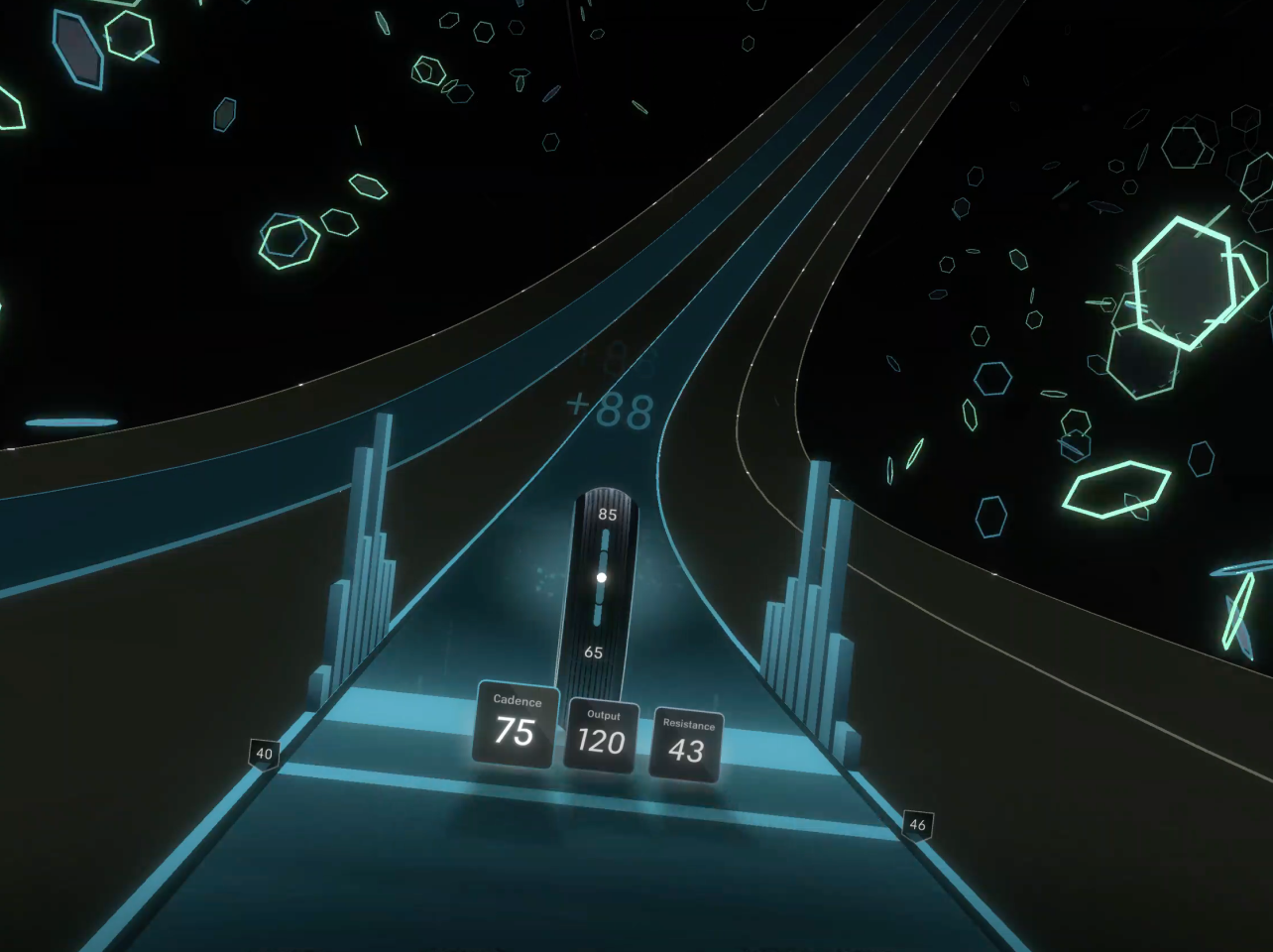
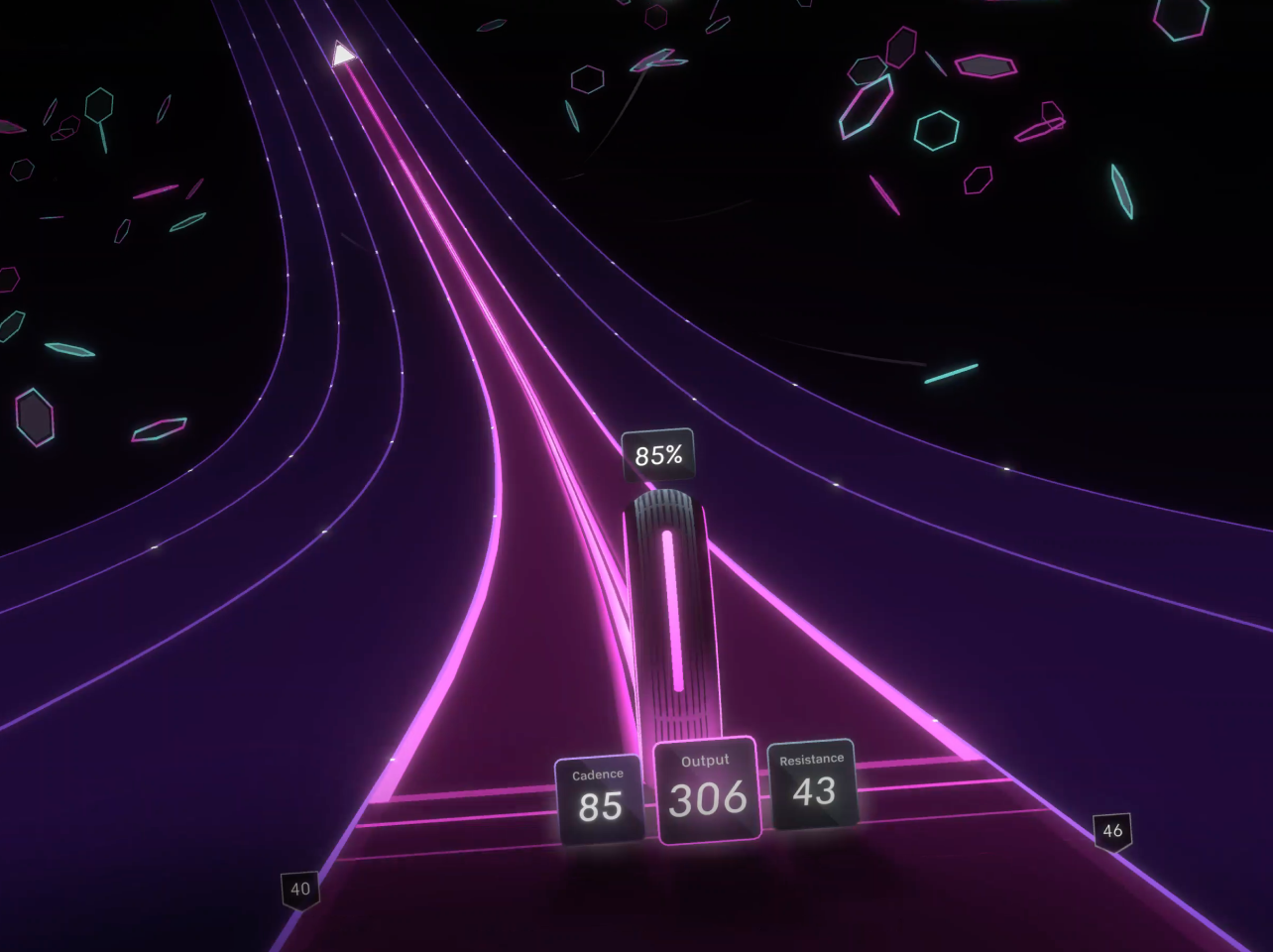
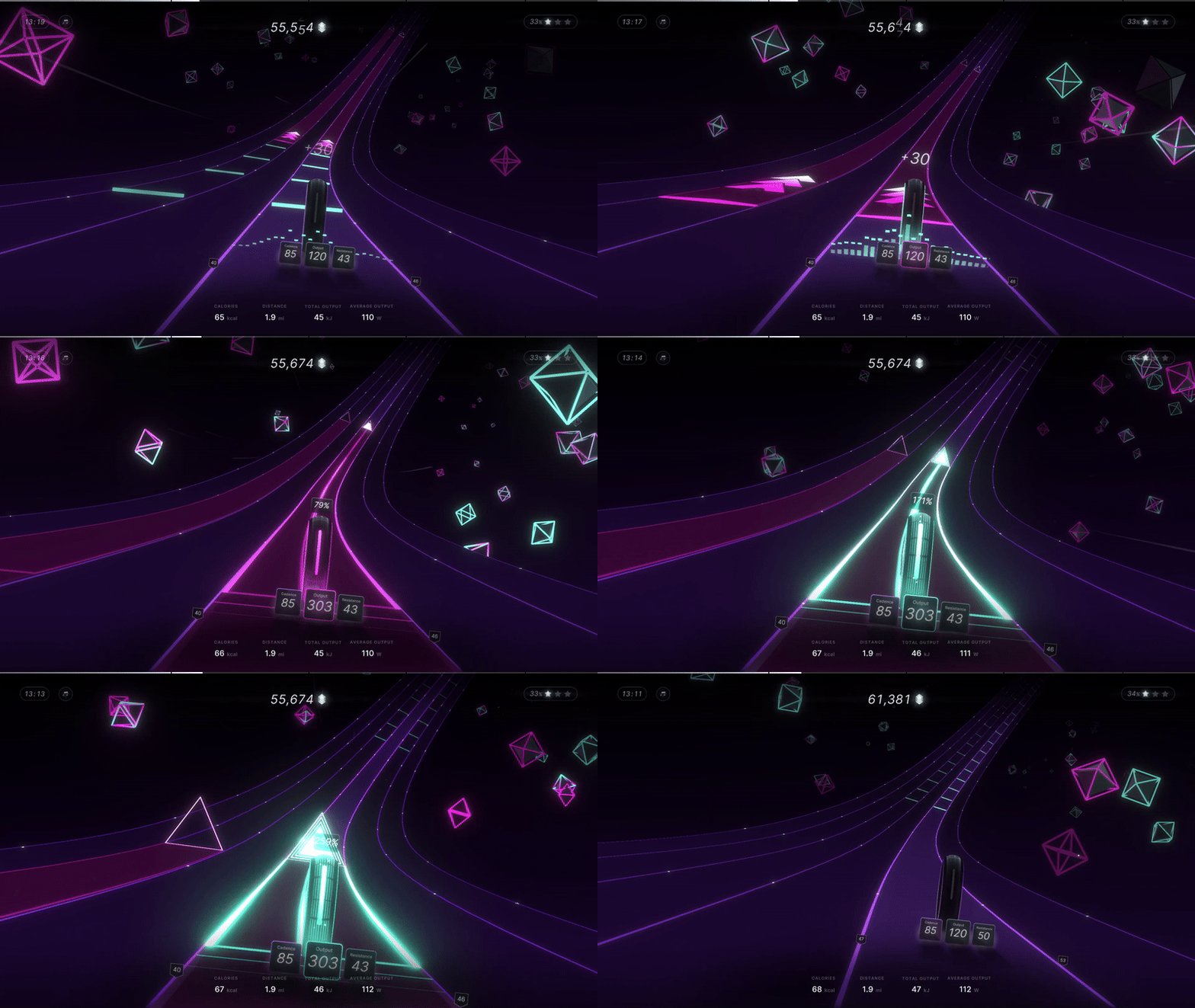
The core gameplay of Lanebreak is like if you played Guitar Hero or Supernatural on a bike. Game elements appear on a track synced up with music. The goal is to interact with game elements by moving the avatar into the appropriate lane. The avatar is controlled by adjusting the bike’s resistance knob. Different game elements also require you to pedal within a certain cadence range. The game elements are:
Beats, collected by being in the appropriate resistance lane
Streams, a cadence/speed-driven mechanic
Breakers, a power-driven mechanic that encourages an all-out burst
I joined Peloton just as Lanebreak had initially been launched. The game was developed in collaboration with ustwo. As ustwo moved off the game, our internal team was tasked with taking it to the next level. This involved optimizing game elements to improve clarity and engagement, and adding color themes to the levels for visual variety.
Lanebreak Tread
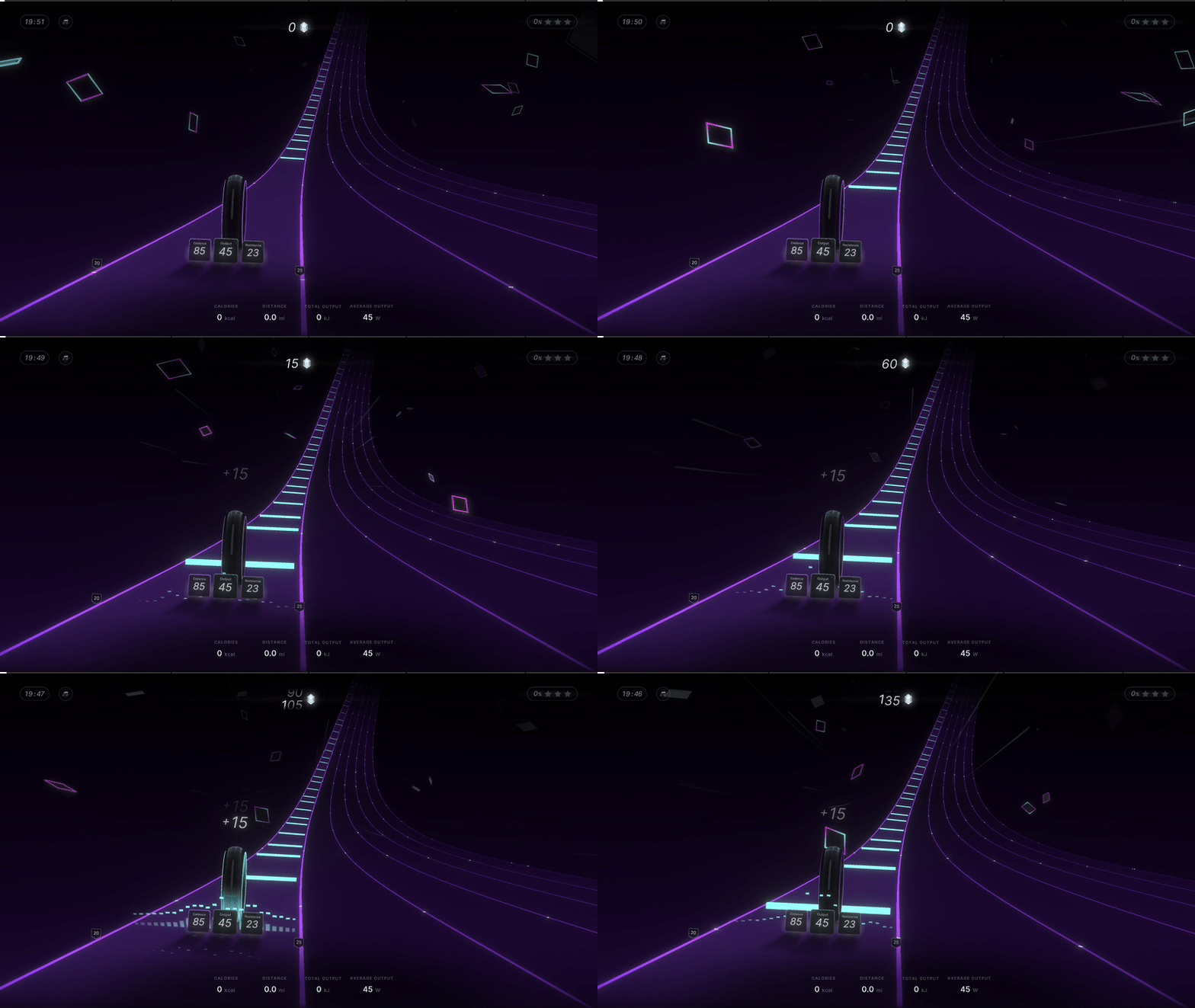
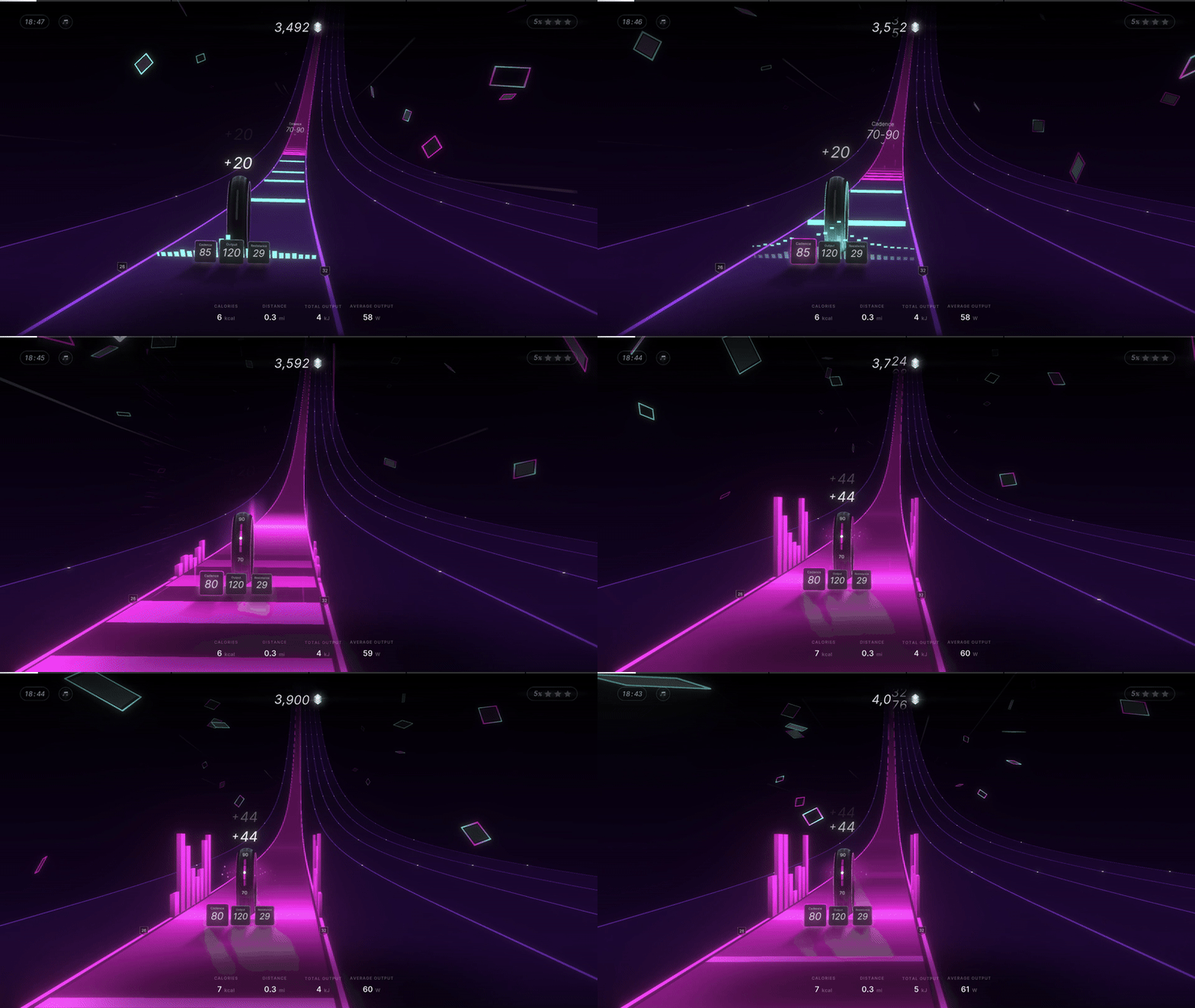
One of the most significant initiatives I worked on was porting Lanebreak to Peloton’s Tread product. This involved an engineering effort to allow our codebase to support both Tread and Bike hardware at once. Additionally, we designed and tested novel game elements that would better accommodate the Tread’s distinct control surface.
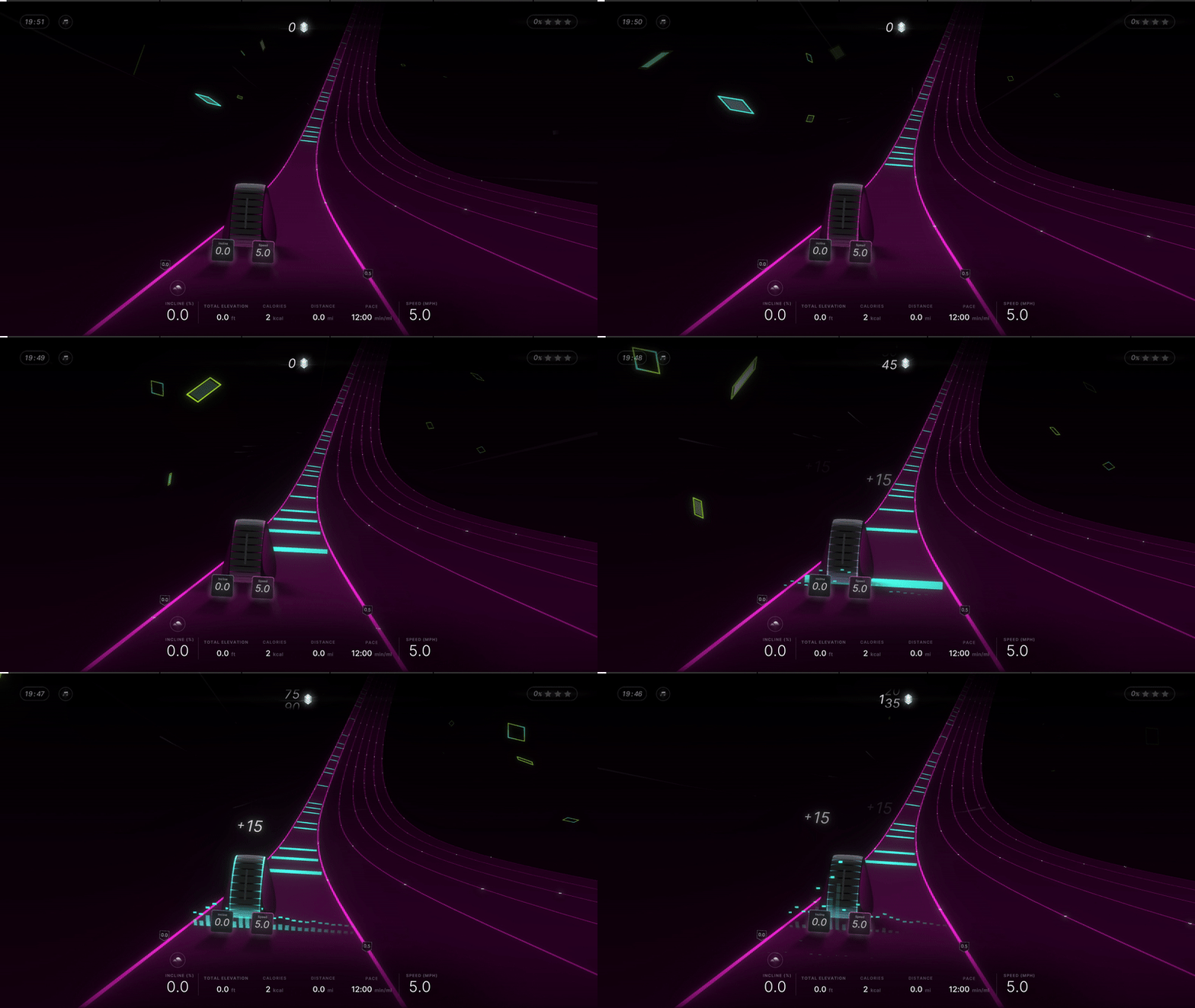
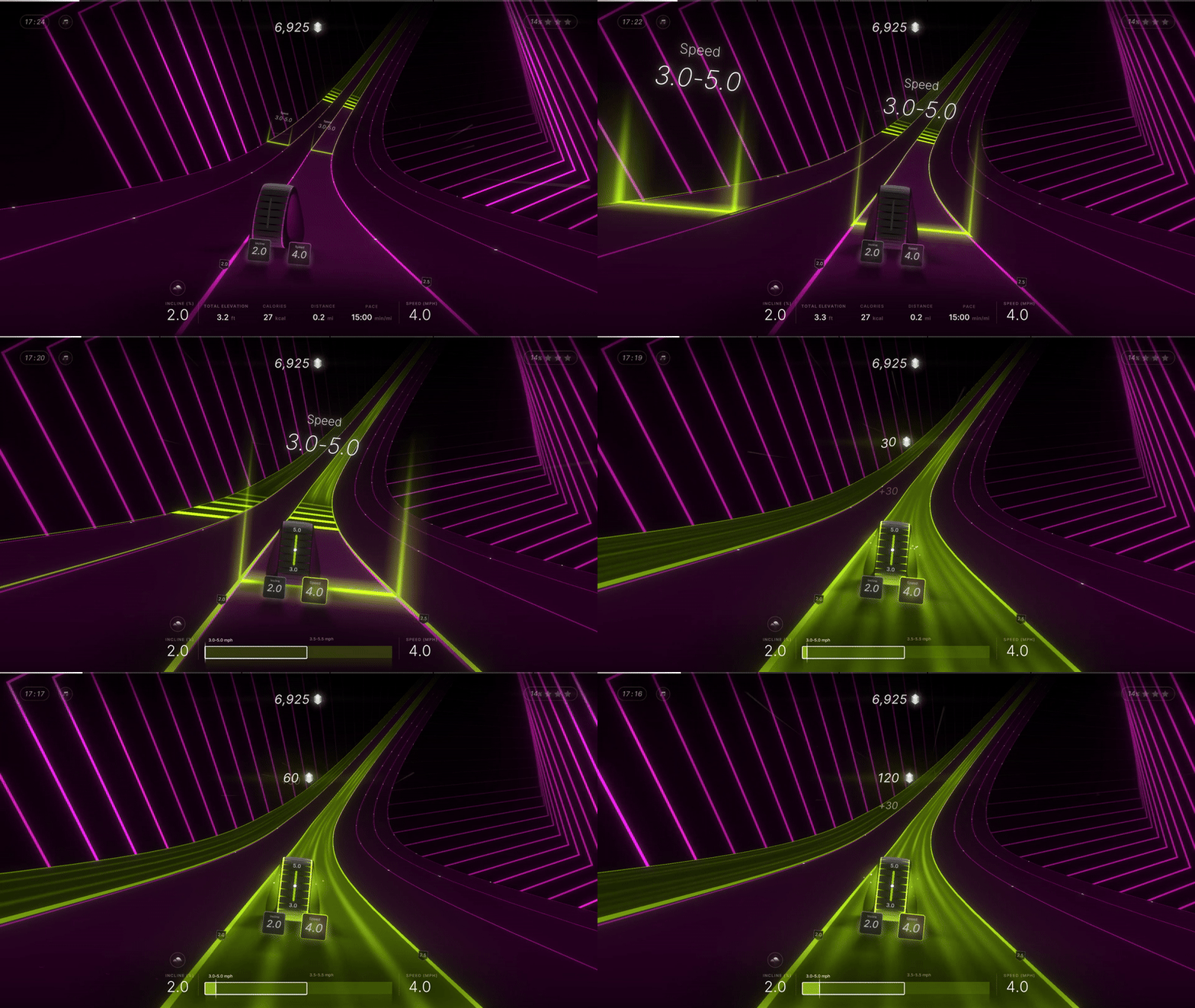
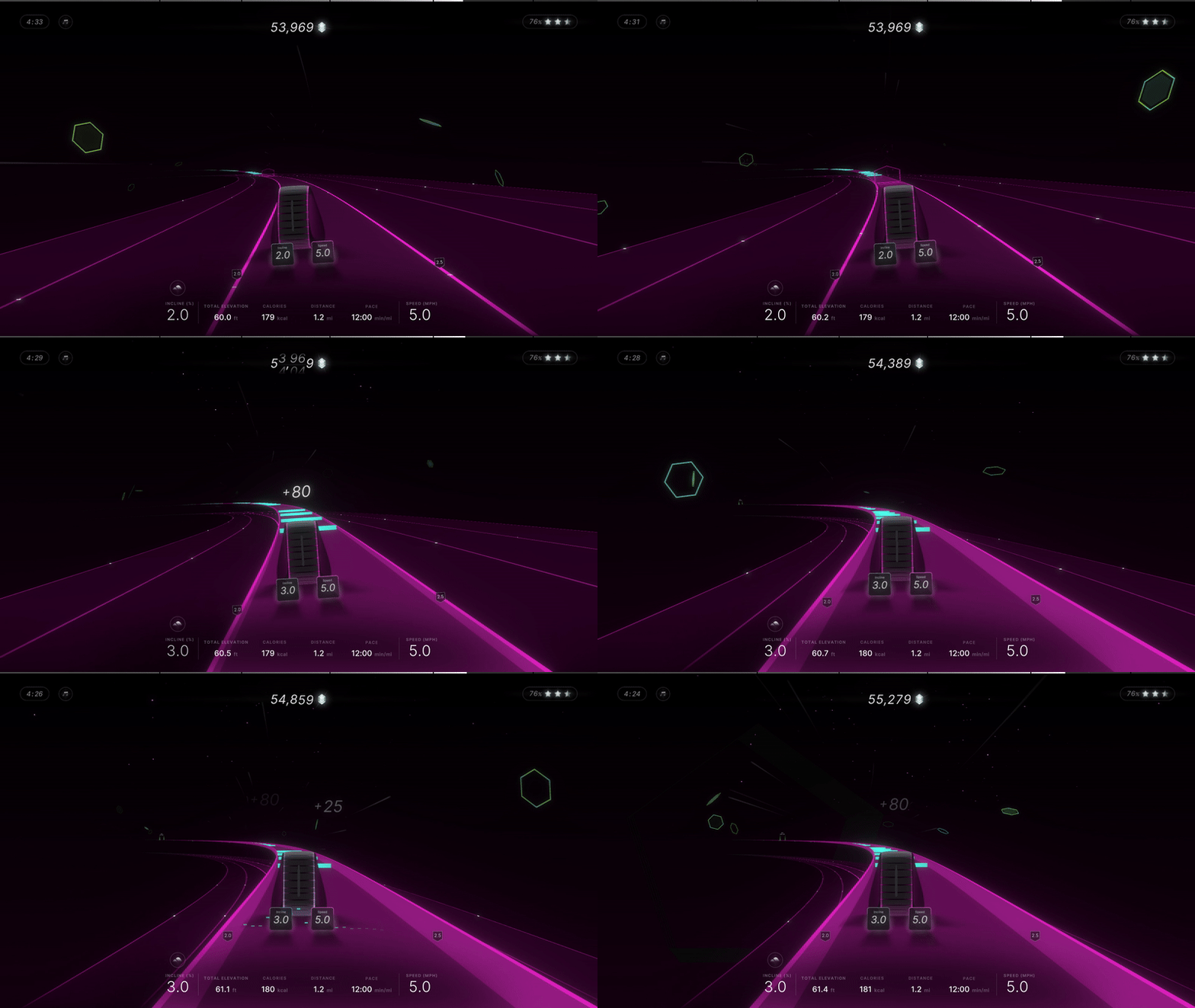
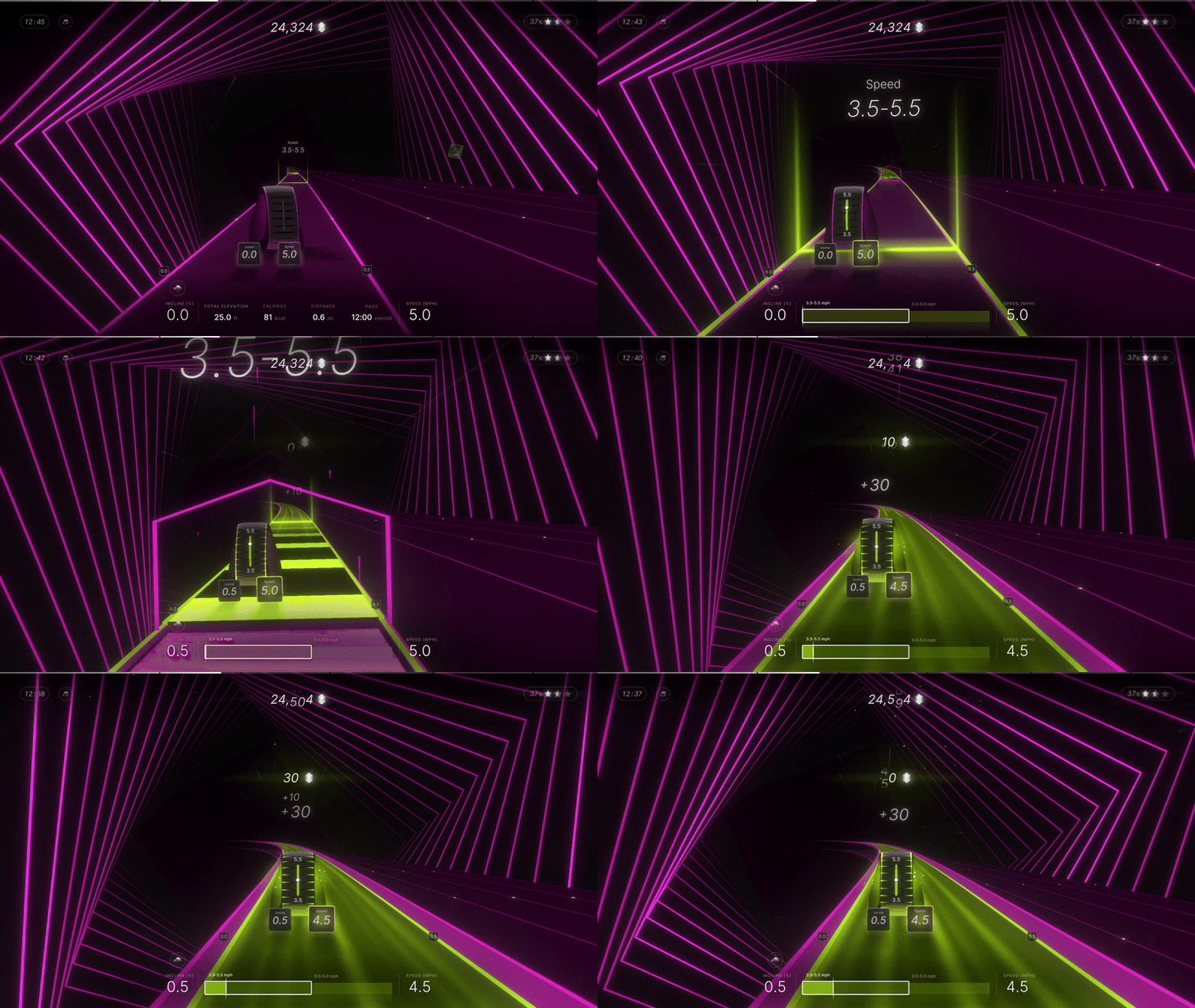
The biggest overall design change is that, instead of controlling the avatar using the resistance knob, the avatar would be controlled by adjusting the incline. Similarly, cadence-related cues would be replaced with speed. Thus we arrived at a new design that replaced two of the main Bike elements, Streams and Breakers, with new Tread-specific elements:
Pacers replace streams as the speed metric-driven element
Hills are added as a way to automatically increase the power metric (incline). It’s not a direct analog to breakers, but treadmills don’t have the same instant response time as the bike
Engineering and Support
There were also the day-to-day responsibilities of maintaining a live service game. I served a monthly, week-long shift as the on-call engineer to immediately respond to and triage issues with the game, often collaborating with customer service agents directly.
We also developed tools to aid in level design: the “level validator” was a piece of software that analyzed a level according to a set of functional rules programmed into it. For example, a rule might be “no Breaker object should be shorter than 10 seconds”. This tool provided an instantaneous way for a level designer to see if a new level crossed a quality baseline before being officially playtested, thereby reducing the number of necessary QA time and increasing the number of levels we could release every cycle.
(Bonus Content) Unreleased Open-World Multiplayer Experience
For the latter half of my Peloton stint, I worked on an ambitious, open-world multiplayer experience as both as designer and developer. I can’t speak on too many specifics about the game, but some drops of news have made it out over the years that give some insight on the type of project it was.
I also led the team that won our 2024 Hackathon, with a project that was heavily related to the game and engine we were developing.
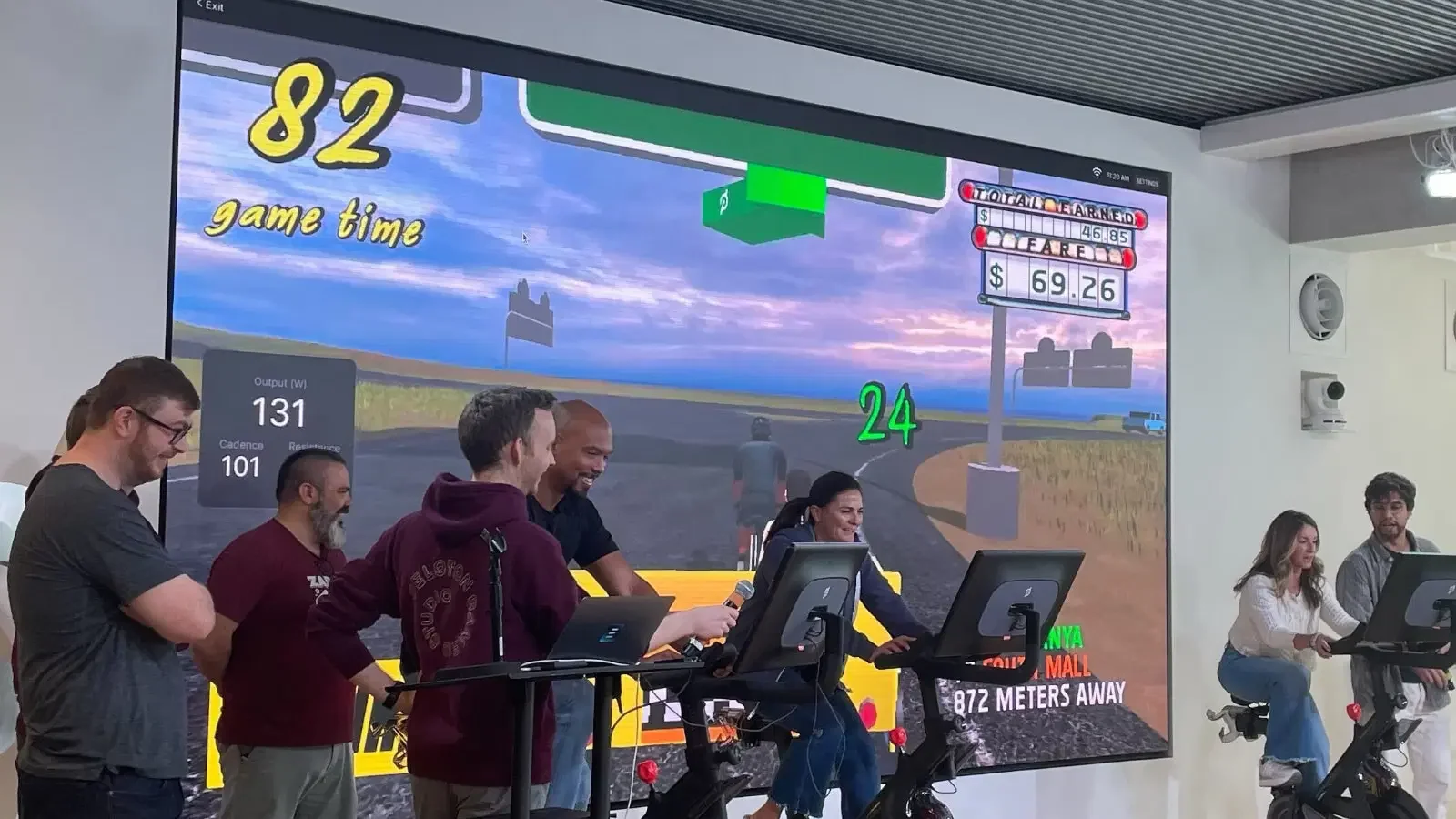
Without getting into too much detail, engineering work included specifically multiplayer networking and gameplay mechanics implementation. As a designer, I focused mainly on designing different mission types and an overall mission progression system.