DreamCube x Manchester United
Mixed Reality + Game Design + Motion Tracking
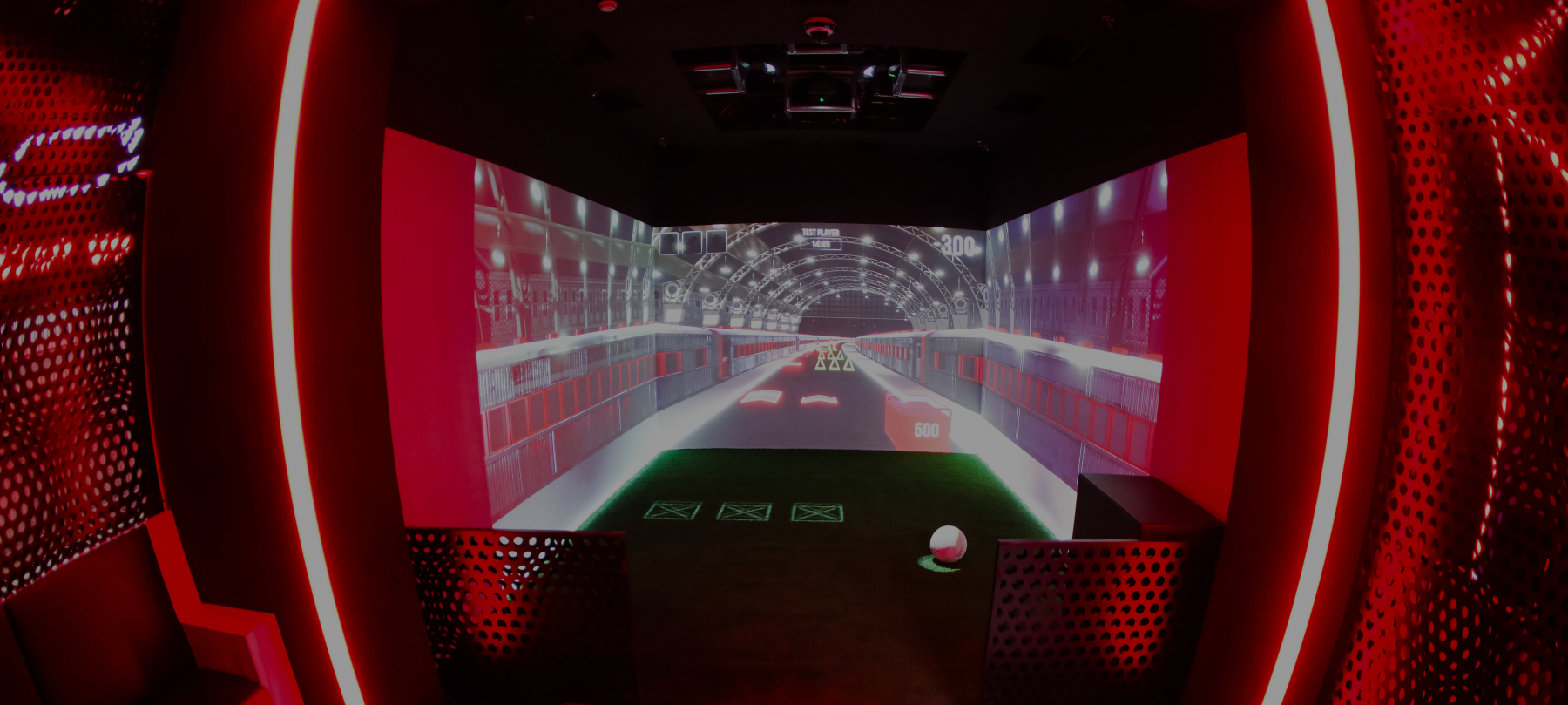
A mixed-reality soccer game played with a motion tracked ball on a custom-built pitch
Overview
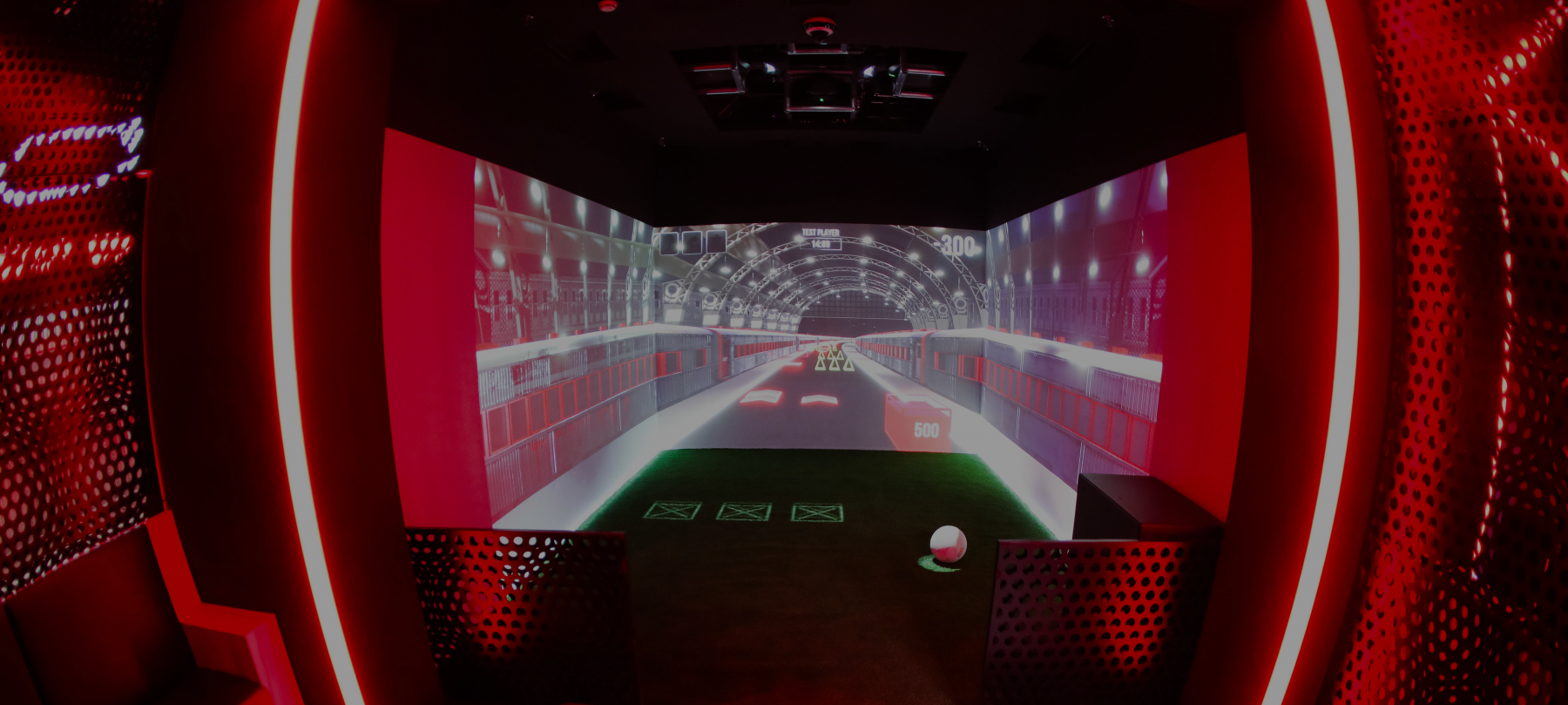
At Local Projects, I worked on the concept, design, and implementation of the DreamCube for our clients Harves and Manchester United. The DreamCube is a custom-built gaming platform that combines a turf pitch, a motion-tracked soccer ball, and a projector matrix into one seamless, mixed-reality experience. Our team created both the concept for the DreamCube platform and for the first game designed for the platform, The Red Devil Experience.
There are 16 DreamCubes located inside a Manchester United Experience Center in Beijing, with plans to expand to more locations within China and around the world.
DreamCube Platform
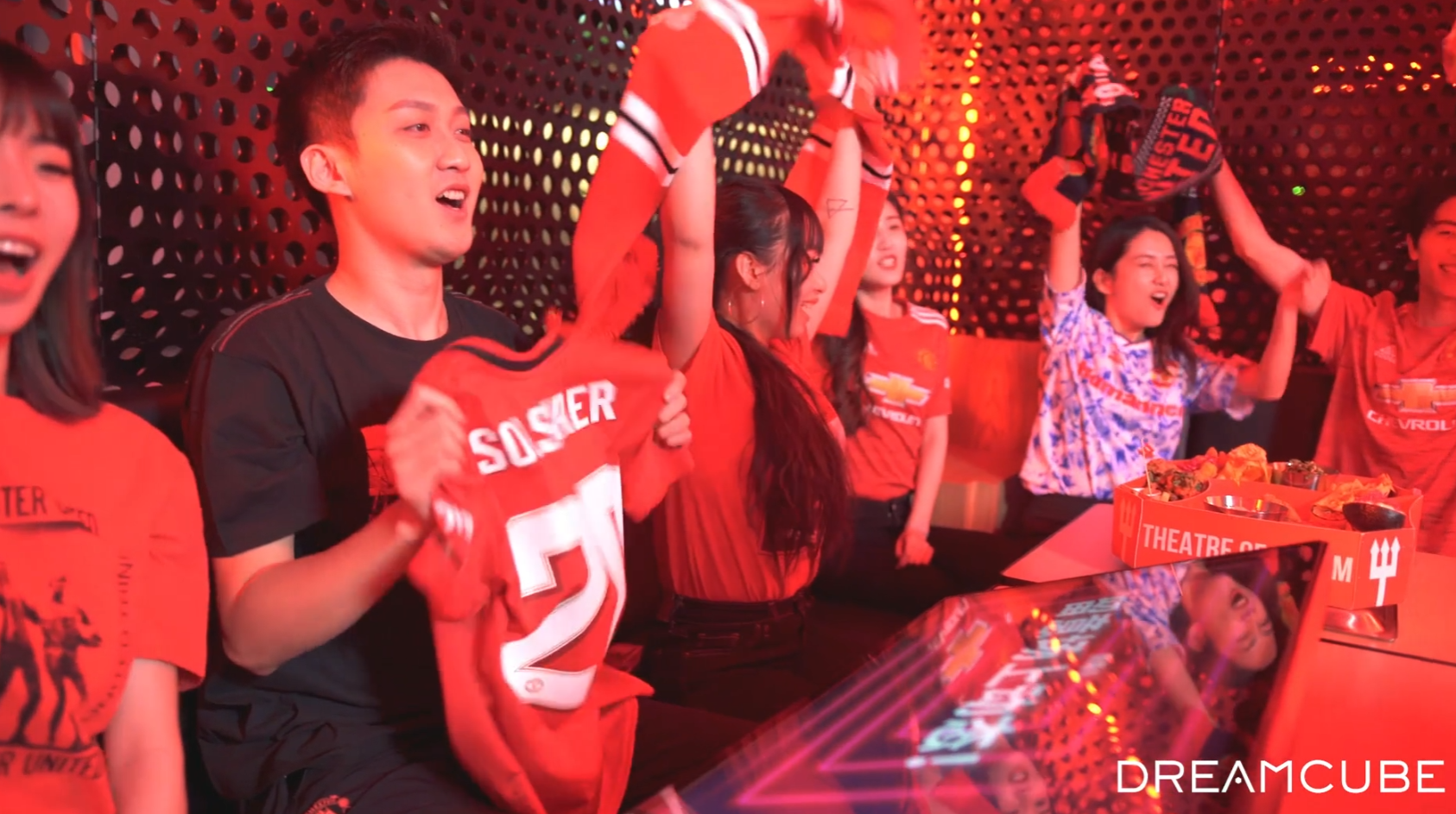
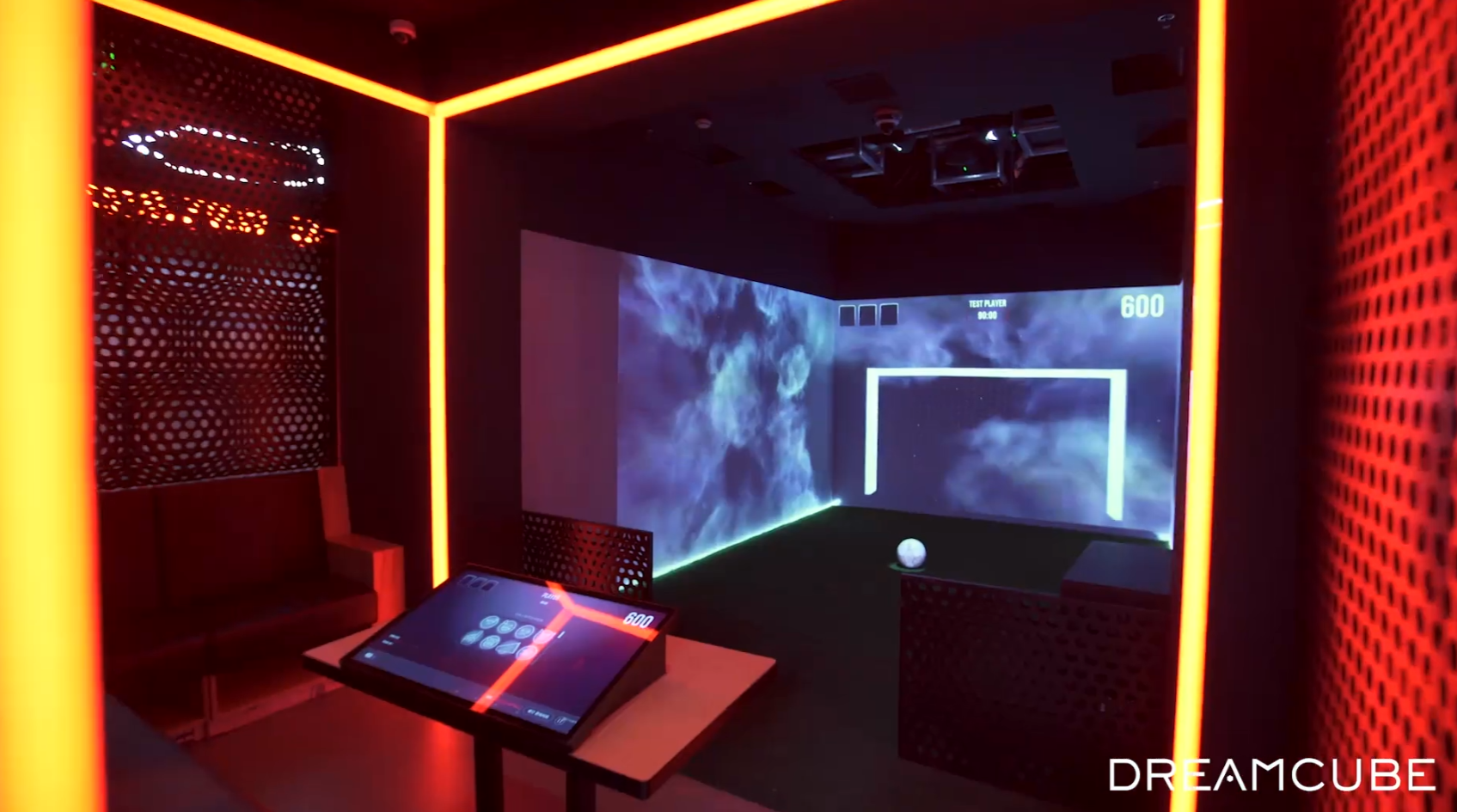
The DreamCube platform is a mixed-reality gaming setup that combines projections on the walls + floor with a motion-tracked ball. Meant to serve groups, each DreamCube additionally has a “Bench” section with seating and a large touchscreen for further interactivity and menu navigation.
The motion-tracking is the meat of the experience here. We used an array of OptiTrack Cameras along with a layer of custom-built software. The system can currently track any ball-shaped retroreflective object, with eventual plans to add multiple balls or non-ball shaped objects.
Gameplay Concept
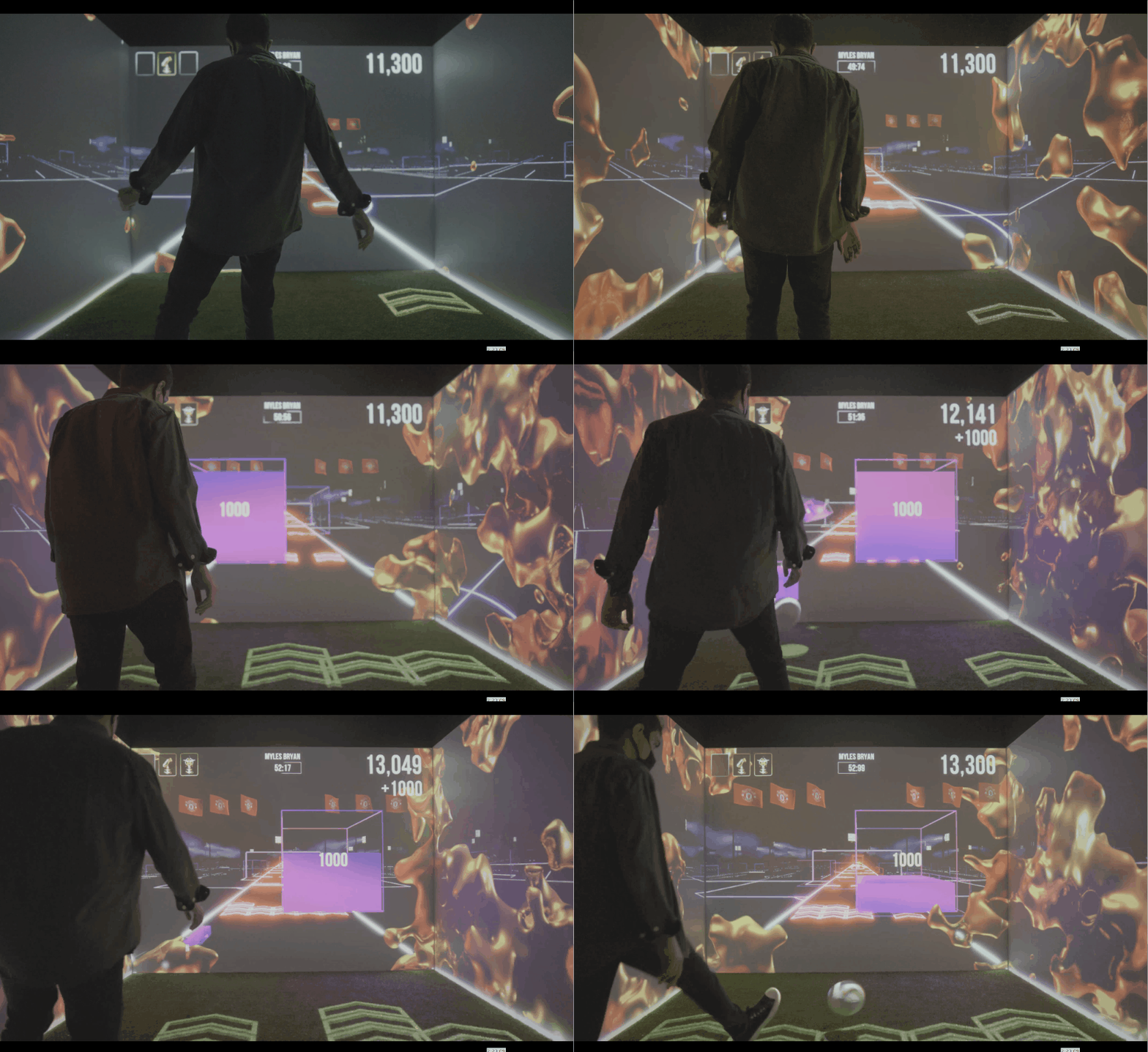
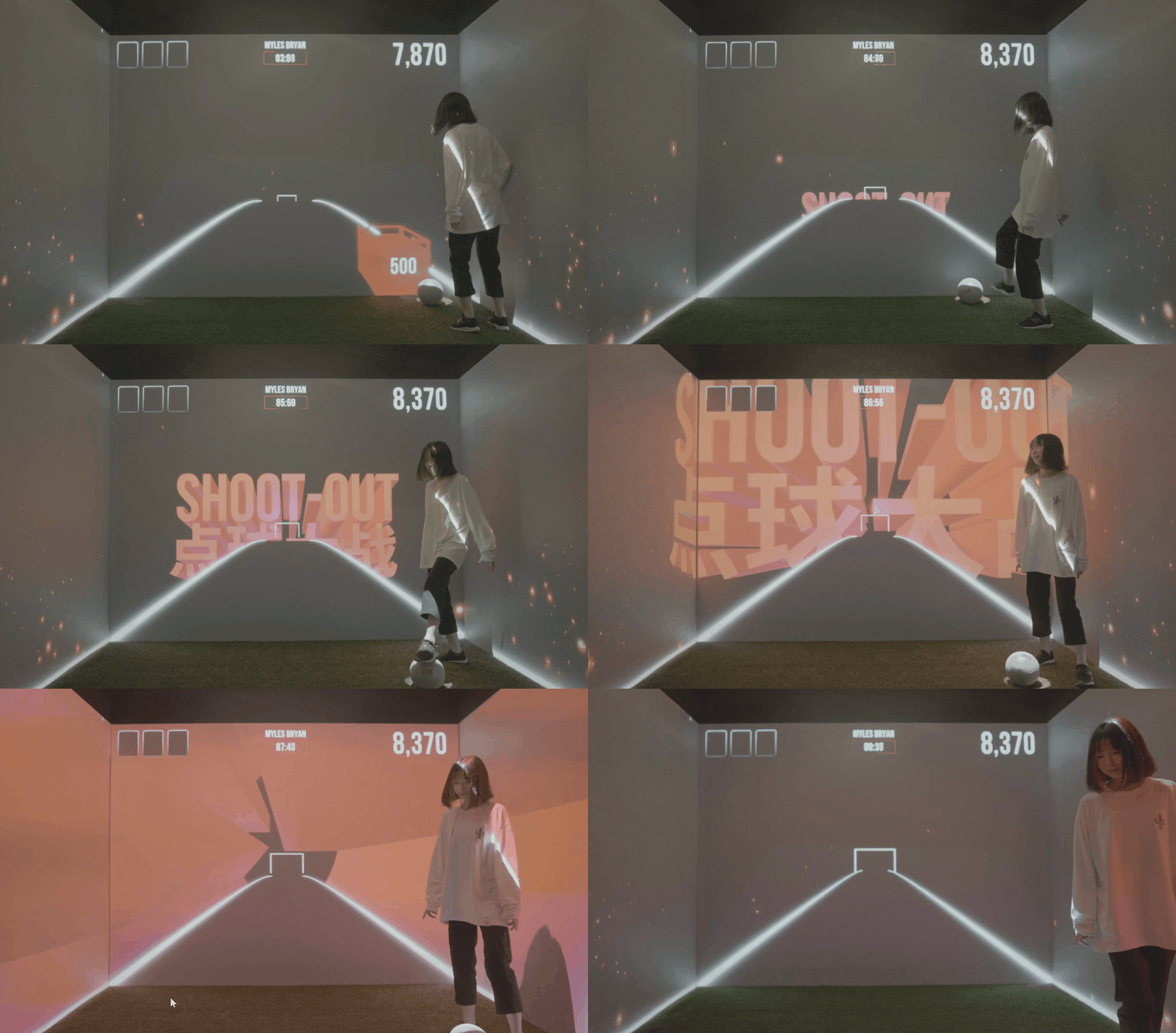
It was a special challenge to think of the first game to make for the DreamCube. As the first game in a new form factor, it had to both show off the capabilities of the system in an interesting way while being fun in its own right. We sought for the DreamCube to immerse the player in a virtual world while also using soccer-based mechanics in unexpected ways.
To complicate things, the pandemic hit just as we started to flesh out the concept. This proved challenging was not impossible, as we developed a Unity program to provide a reasonable simulation of the DreamCube experience. Even when we eventually built the hardware prototype and got back into the office, the simulator enabled remote development and increased productivity.
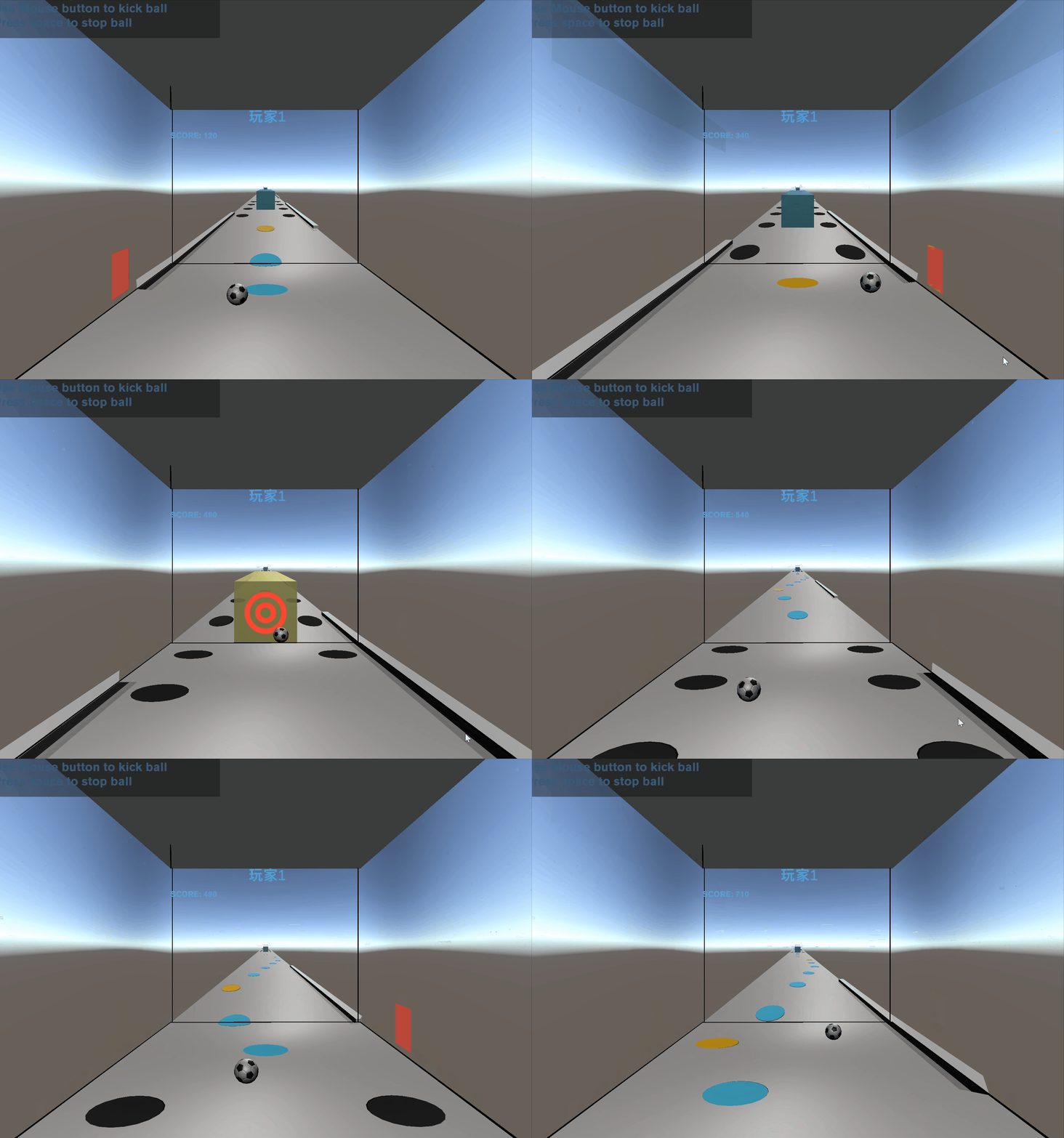
An early prototype, running in the simulator
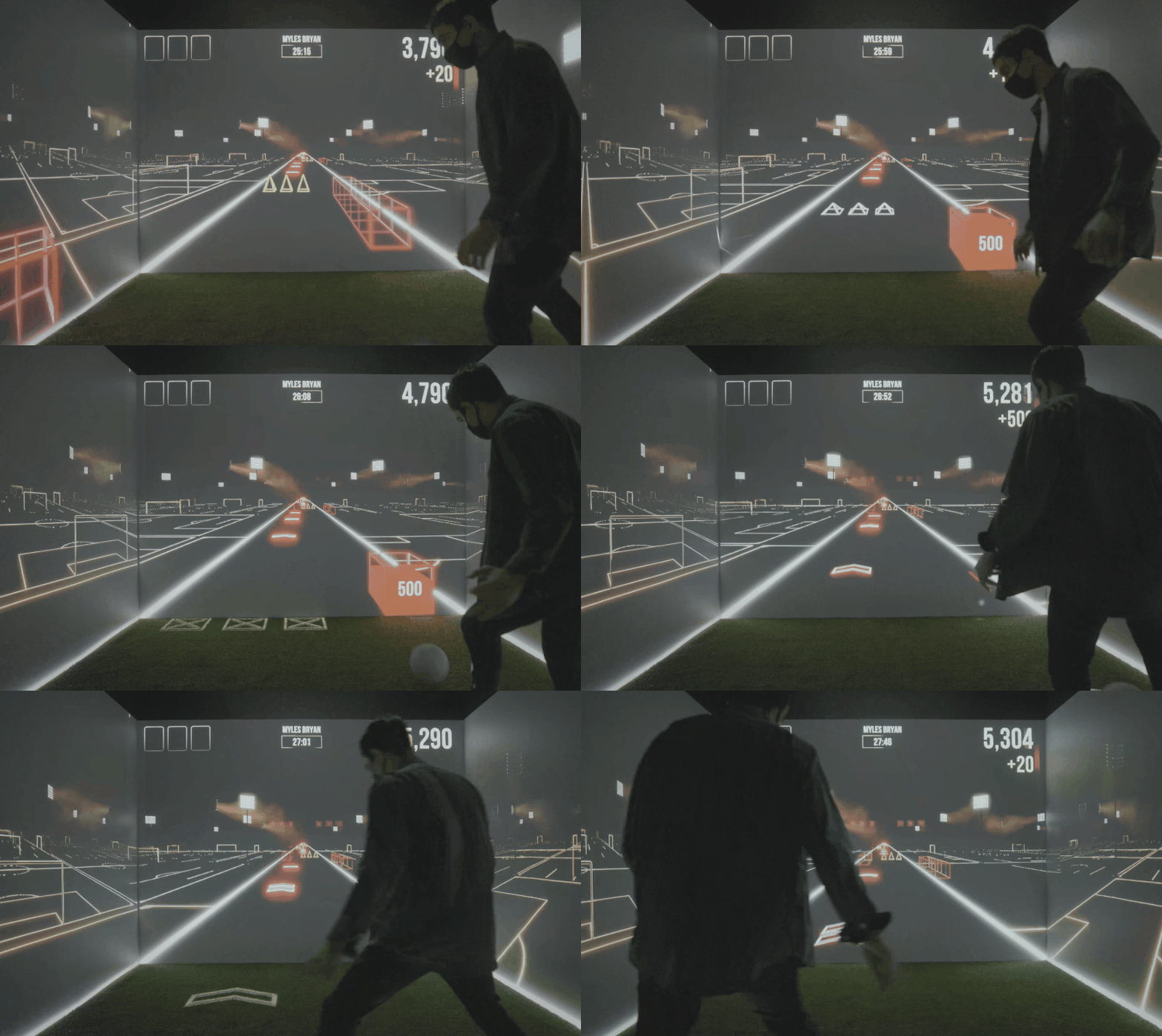
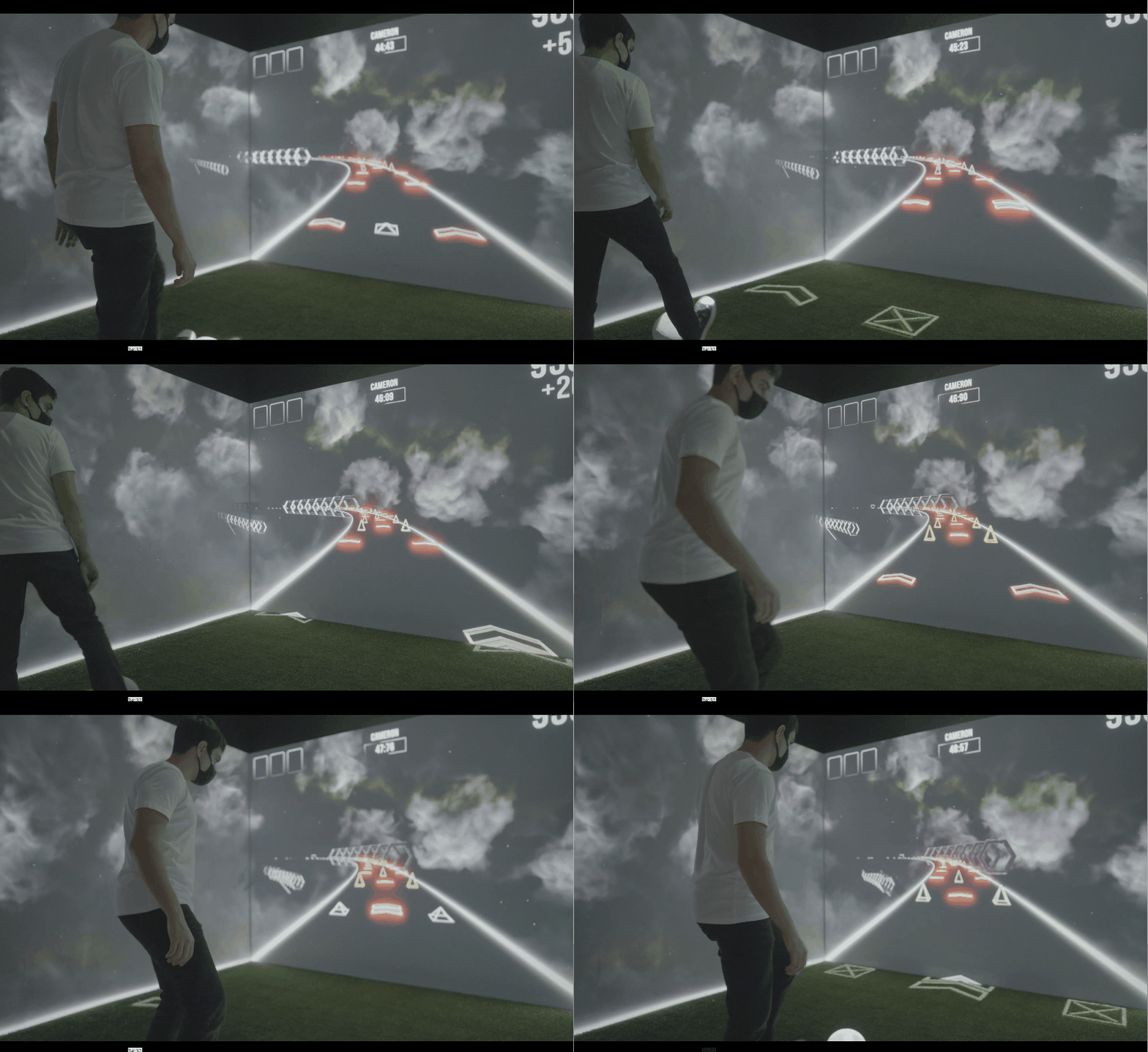
For the concept we eventually chose, we drew heavy inspiration from games like Guitar Hero and Thumper, games we affectionately called “moving through space” games. We went in this direction for two different reasons:
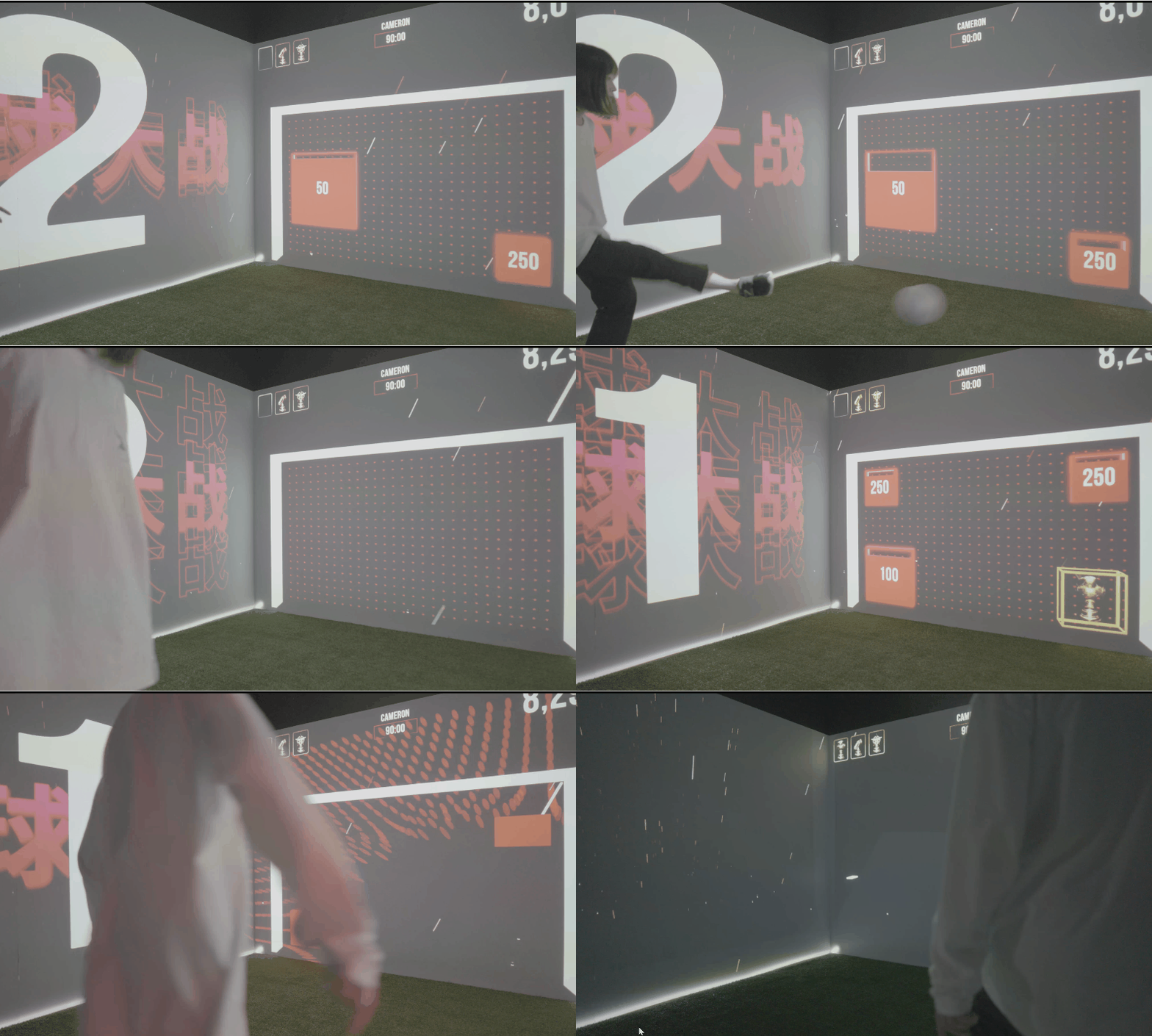
The first was gameplay mechanics. In the DreamCube, there are essentially two things you can do with the ball: kick the ball against the wall and dribble around on the turf. Our game concept thus needed a reason for targets appearing on the wall and for collectibles to appear on the floor. The “moving-through-space” games involve things flying at the user as the user flows through space. In Guitar Hero, these are the notes you’re supposed to play on the guitar. For our game, these would be targets (on the wall) and collectibles (on the floor).
The second reason was based on a concept derived from VR best practices, which is that movement in VR space is best when it’s simple, smooth, and not directly tied to user movement. The DreamCube is not equivalent to a VR headset, but since it is similarly immersive, we assumed the heuristic would apply. The “moving-through-space” games have the perfect type of movement, since they put the player on a track on which they smoothly move through space.
Ultimately, our concept was a little Guitar Hero/Thumper and a little of something completely new.
Bench Interaction
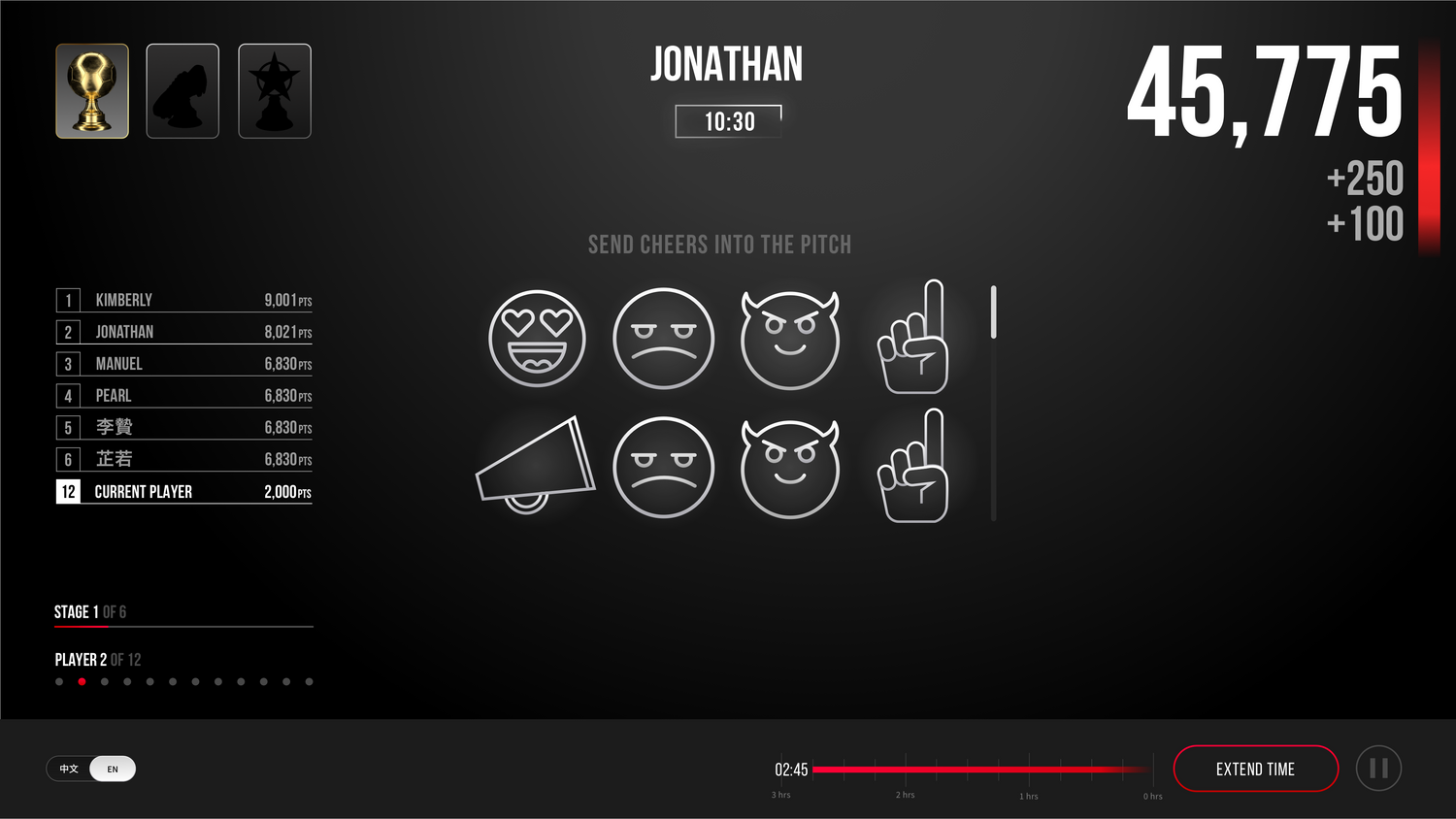
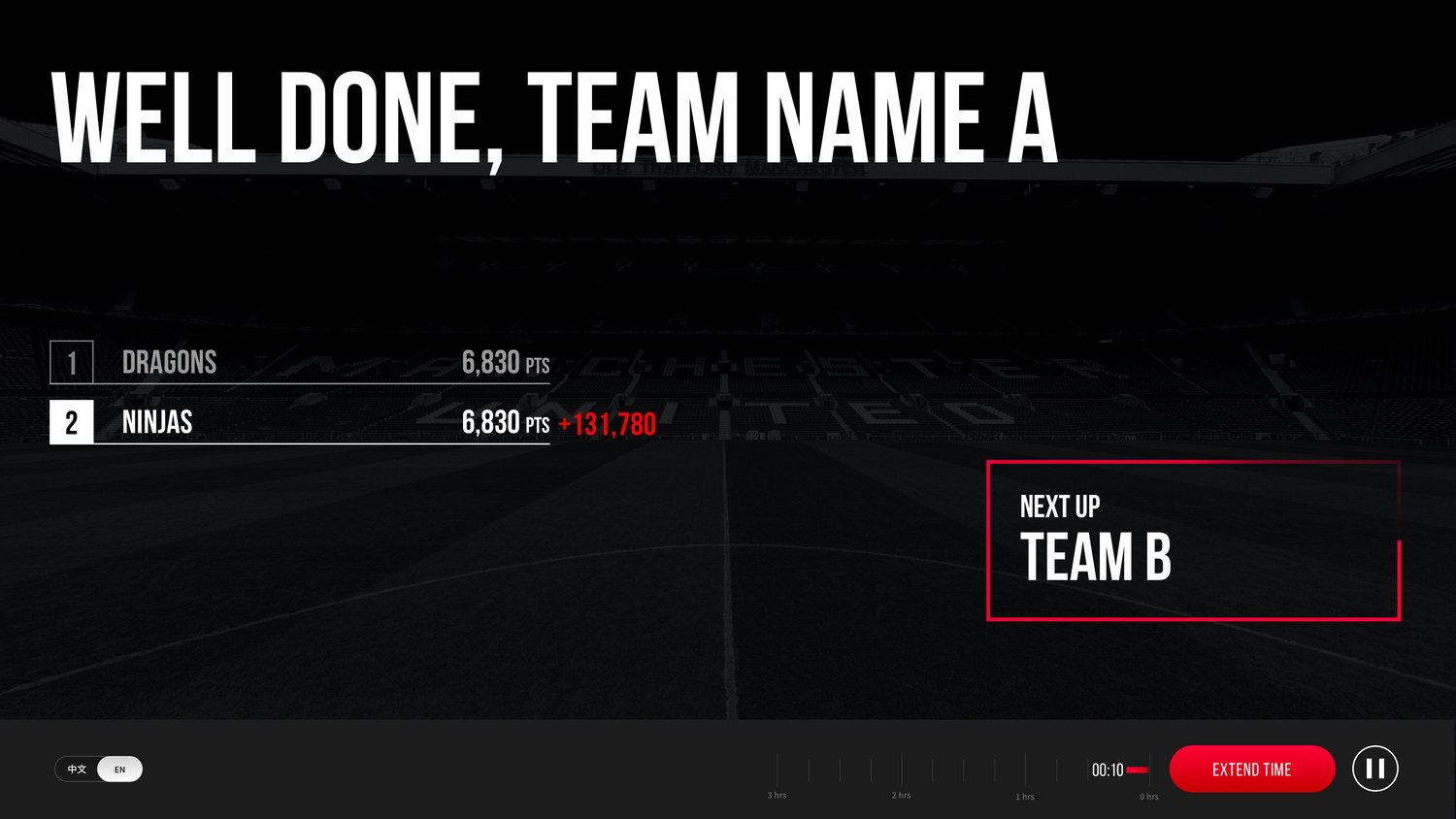
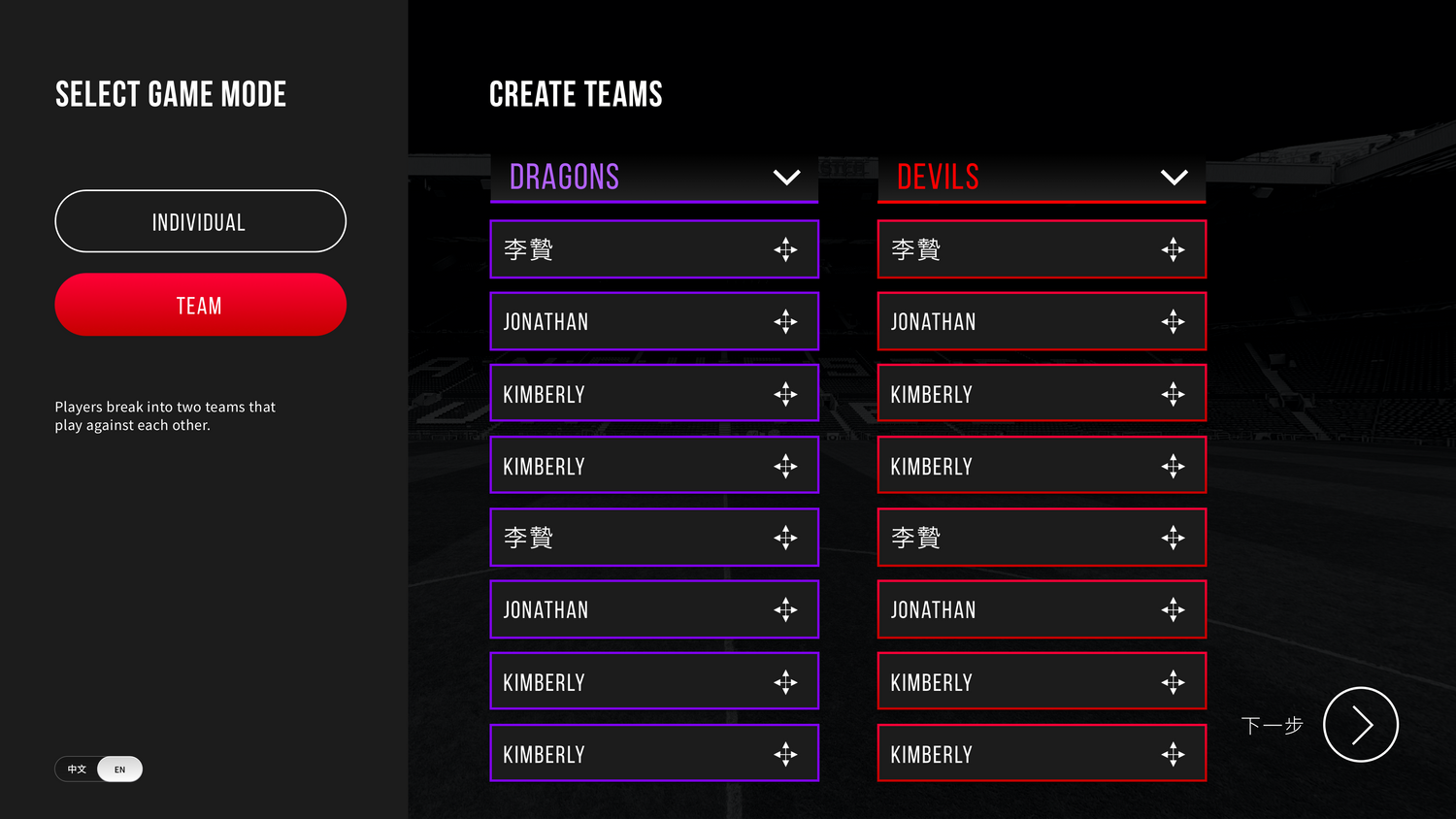
While the majority of the gameplay experience happens on the pitch, the DreamCube is intended to be a group experience. The bench area contains both seating and a giant touchscreen that allows for navigating menus, selecting teams, and sending emoji onto the pitch.